
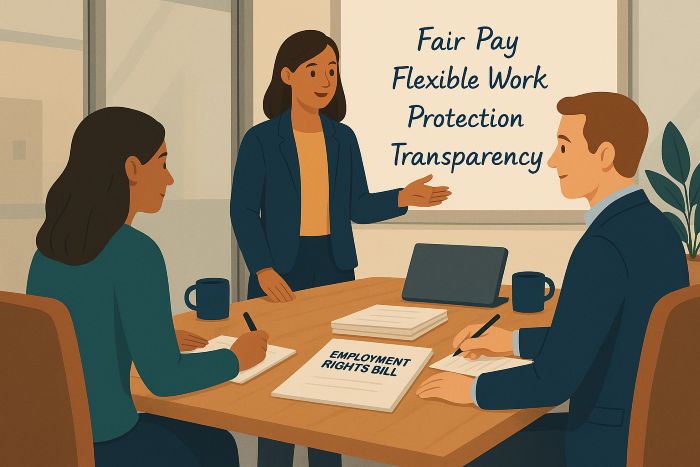
The Employment Rights Bill: Key Changes and What They Mean for Workers and Employers
The Employment Rights Bill was introduced in October 2024 and is part of a broader legislative push by the Labour government to improve workers’ rights. This includes reforms around flexible working, sick pay, and unfair dismissal protections.
These changes come at a time when work patterns are evolving rapidly, with remote and flexible working becoming the norm for many employees, and the freelance economy continuing to expand. The new legislation seeks to address these shifts and create a more supportive, fairer working environment. But what exactly do these changes mean, and how will they affect employees and employers alike?
Key Provisions of the New UK Employment Legislation
1. Enhanced Right to Request Flexible Working
Key changes include:
Flexible working has become one of the most significant demands among employees, particularly in the wake of the COVID-19 pandemic. In response, the UK government has proposed new legislation that strengthens employees’ rights to request flexible working arrangements.
2. Expansion of Family Leave and Pay
The Bill also expands family leave and pay entitlements, acknowledging the growing importance of work-life balance and caregiving responsibilities. The changes are designed to offer greater support to parents and carers in the workforce.
Notable updates include:
- Day one rights to leave: Both paternity leave and parental leave will become a day one right. This ensures that parents have greater access to taking time off in relation to their children.
- Bereavement leave: Under the bill, employees will be entitled to paid bereavement leave to cope with loss. Employers would need to provide a dedicated policy to outline employee entitlements and any enhanced support staff would receive when they experience loss.
3. Improved Rights and Protections of freelance workers
Freelance work has grown rapidly over the past decade. However, workers in this sector have often found themselves in precarious working situations, with little protection compared to traditional employees.
The new legislation introduces important protections for self-employed freelance individuals, particularly regarding contracts. Companies will have to provide freelancers with written contracts outlining the terms which will apply during the period of work, reducing confusion and uncertainty around conditions of work.
4. Stronger Workplace Protection Against Harassment and Discrimination
The new legislation also strengthens protections against harassment and discrimination in the workplace. These changes aim to create a safer, more inclusive environment for all workers.
Key aspects include:
- Stronger enforcement against harassment: Employers will be required to take all reasonable steps to prevent sexual harassment in the workplace, stepping up the new laws in place for employers from October 2024.
- Third party harassment: Employers will, once again, be responsible for harassment against their staff by third parties, for example, clients and customers.
- Protection for those returning from parental leave: Employees returning from maternity or paternity leave will be more strongly protected from dismissal, ensuring they can return to their roles without fear of discrimination or loss of career progression.
What other key changes are included?
- Day one rights: Employees will have the right to claim unfair dismissal from their first day of work. As it stands, they currently must wait for two years.
- Statutory probation periods: While employees can still claim for unfair dismissal from day one of employment, the government are consulting on a statutory probation period for new hires.
- Sick pay changes: Workers are set to gain statutory sick pay from their first day of absence, rather than day four. Currently, workers need to earn at least £123 on average per week to be eligible for statutory sick pay. The government are planning to remove this lower earnings limit for all workers.
- Zero hour workers: Those with no guaranteed hours of work, and those with a low number of guaranteed hours, will have protections against cancelled shifts and will also have a right to move to a contract which guarantees a higher number of hours which are regularly worked.
A Step Toward Fairer Work Practices
The UK’s new employment legislation marks an important shift towards a more inclusive, fair, and flexible work environment. From stronger protections for gig workers and enhanced family leave entitlements to more robust rights around flexible working and anti-discrimination measures, these changes reflect the evolving nature of work in the 21st century.
How Will These Changes Affect Employers?
For businesses, the introduction of these new employee protections will require careful consideration and adjustments to existing policies and practices. Employers will need to:
- Review employment contracts: It will be necessary to review contracts to assess whether they sufficiently reflect new rights regarding flexible working, family leave, and protections.
- Assessment of new hires: Employers will need to ensure their probationary period review system is robust in order to assess the suitability of a new hire.
- Enhance training and awareness: HR teams and managers must be educated on the new rules surrounding harassment, discrimination, and flexible working so they can effectively handle requests and complaints.
- Invest in wellbeing: Businesses will need to take employee mental health seriously, ensuring they have resources in place for support and wellbeing.
Employers will need to review and potentially update their policies to comply with the new legislation. This may involve revising employment contracts, updating HR practices, and investing in training programs. Failure to comply with the new rules could lead to legal consequences, including employment tribunals, compensation claims and reputational damage. However, embracing these changes offers an opportunity for companies to foster a more loyal and engaged workforce.
We are working in conjunction with a leading provider of human resources (HR), employment law, and health and safety services to businesses. If you’re interested in receiving further information or guidance, then fill in the form below and a representative of the business will be in touch.